Mozambique's Marlin Fishery Runs a Tighter Calendar Than Most Trips Assume
Why Bazaruto Archipelago giant marlin fishing really peaks May-December, and how it compares in cost to Kenya or Pacific fisheries.
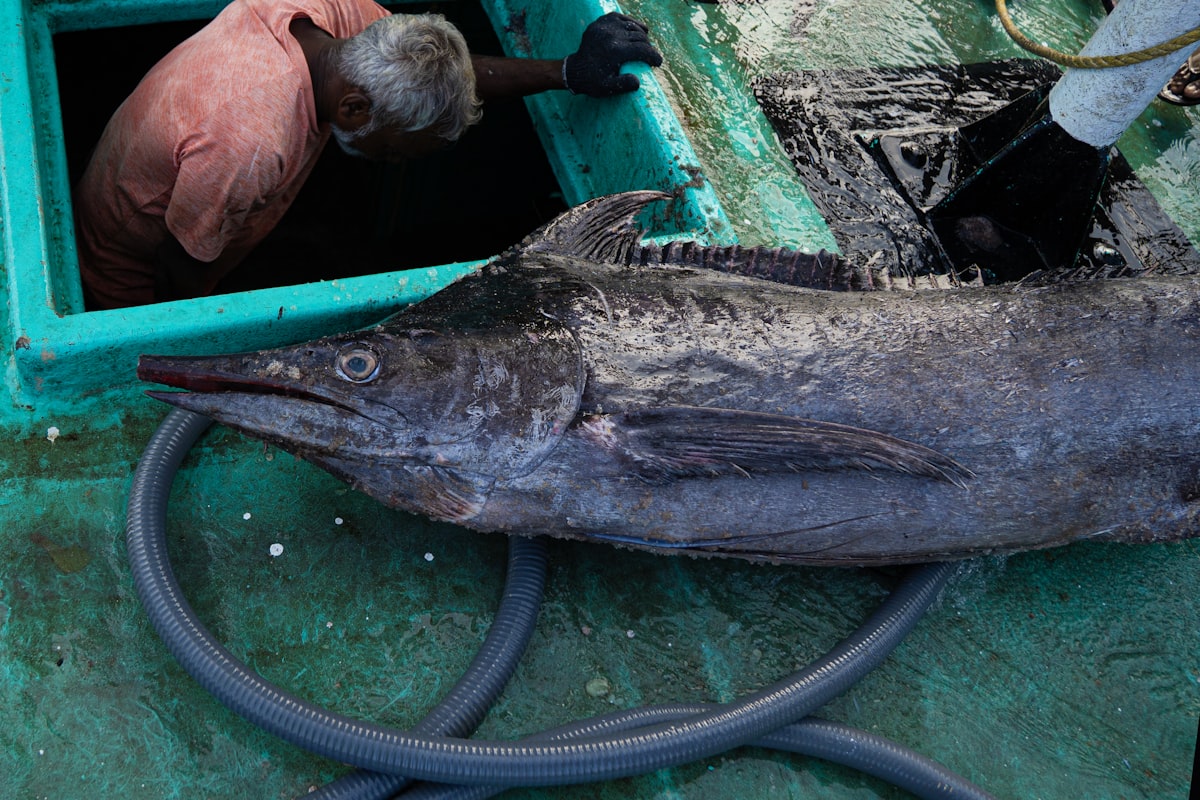
Book a Mozambique marlin trip for March expecting the same intensity as a December booking, and you’re planning around a marketing generalization rather than how this fishery actually behaves. The genuinely productive window for giant marlin here runs roughly May through December, with real variation even inside that stretch. There’s a complication most trip-planning pages skip past entirely: the strongest marlin months, October through December, sit right against the front edge of Mozambique Channel cyclone season, which typically runs November through March. Regional weather trackers have flagged that channel’s cyclone activity as increasing in frequency in recent years, not settling down. Book the calendar’s best-looking month and you’re also booking the first weeks of the riskiest one for getting blown off the water.
The Bazaruto Archipelago and surrounding Mozambique Channel waters hold a legitimate giant marlin fishery, riding the same warm current dynamics that make this stretch of the Indian Ocean African coast one of the more underrated big-game destinations relative to its actual fish quality and size potential. The archipelago itself is small: four main islands (Bazaruto, Benguerra, Magaruque, and tiny Santa Carolina) spread across a national park declared in 1971 and now running roughly 1,430 to 1,580 square kilometers of protected land and sea, depending on which official source you check. Bazaruto Island alone accounts for most of that land area at around 12,000 hectares; Santa Carolina, by comparison, is barely a sandbar with a lodge on it. None of that acreage is where the marlin fishing actually happens, since the boats run out into the channel itself, but it explains why permit zoning inside the park boundary is a real constraint rather than paperwork theater.
A Captain’s Blog post from Silverfish Lodge, which runs trips into the archipelago, puts the difficulty plainly: marlin fishing here takes “dogged determination,” a coordinated crew, and an angler conditioned enough to fight a fish for hours. The same post cites Johnny Harel, who fished 23 consecutive days before landing an all-Africa record marlin, and notes committed anglers investing 60-plus fishing days per season, year after year. That record itself is a real, dated catch rather than lodge folklore: a 1,298lb black marlin taken on a lure off the top of Bazaruto Island back in 1998, fished from a 25-foot boat, still the benchmark serious anglers here measure themselves against a quarter-century later. The boat FV Bounty, in its first season working the archipelago, had already produced an estimated 1,100lb marlin released, plus a 945lb fish weighed two days before the post was written. The same blog is blunt about the flip side too: marlin fishing is “a lot tougher than what most people think,” and plenty of fish are lost despite doing everything right.
What separates Mozambique from Kenya’s coast further north, or the more famous Pacific marlin grounds, is the specific bait and current pattern around the archipelago’s channel systems. Local captains read tidal movement through these channels as carefully as reef-pass anglers elsewhere read GT channel timing, since marlin here often stage in predictable zones relative to the tide rather than roaming randomly across open water.
Kenya’s Pemba Channel, worked out of Shimoni near the Tanzania border, is the fishery most often used as Mozambique’s yardstick, and it’s a fair comparison rather than a marketing stretch: Pemba Channel Fishing Club’s own water gets described independently as regularly ranked among the top ten marlin destinations on the planet. The gap is mostly price. Big-game charter days out of Kenya run close to $1,000 on the low end, and full weekly packages with lodging and a fishing license commonly land in the €1,800-2,800 range per person. A Bazaruto-area charter, by contrast, books for around $700 a day inclusive of fuel, food, drinks, and gear, per current listings from operators working the Vilanculos coast, with accommodation to go alongside it starting as low as $310 a night for a bed-and-breakfast unit at one of the established beach lodges there. That’s not a marginal difference. It’s the gap between a trip a dedicated angler saves months for and one they can justify booking on a normal travel budget, for genuinely comparable-caliber fish.
Tackle for dedicated trolling runs the expected heavy conventional class: 80-130lb outfits paired with large lure spreads or natural bait, standard for giant marlin targeting anywhere in the world. Secondary species (sailfish, various tuna, dorado) round out a trip in a way that keeps days productive even when marlin aren’t cooperating, similar in spirit to Panama’s multi-species depth. A trip here rarely gets fully skunked even during slower marlin stretches.
Cost sits at a genuinely accessible point relative to the size of fish potentially available, since Mozambique hasn’t built the same premium-tourism infrastructure as more established marlin destinations. Where that shows up as a real trade-off: infrastructure outside the fishing itself, meaning accommodation quality, general tourism amenities, ease of international travel connections, genuinely trails more developed destinations covered elsewhere in this guide. Flights routinely connect through Johannesburg with a further hop to Vilanculos, and the last stretch to an archipelago lodge is usually by light aircraft or boat transfer, not a paved road.
Licensing is its own small project. A sport fishing permit is required for the Bazaruto area, a protected marine park with zones closed or restricted to fishing, obtained through the Maritime Administrator in the relevant provincial capital and typically costing $20-50 USD (some operators quote it closer to R1,100, roughly the same range once converted) for a permit running 30 days for visiting anglers. You’ll need your passport on hand to get one issued. Reputable operators fold this into the booking process, but confirm it explicitly rather than assuming it works the way it would chartering a boat in Florida. Park zoning here has changed more than once, and what counted as open water two seasons ago isn’t guaranteed to still be open now.
The cyclone-season overlap isn’t a reason to avoid the peak months, but it’s a reason to build in slack. Anglers who want the calmer, lower-risk half of the season — April through roughly September or October — trade some marlin intensity for far more predictable weather and a lower chance of a lodge calling to say a system offshore has shut the boats down for two or three days. Operators rarely advertise that trade-off up front, since it undercuts the peak-season sales pitch, but it’s the honest shape of the calendar here.
A short trip here is a gamble in a way it isn’t at more heavily pressured fisheries. Given how much of marlin fishing comes down to reading tide-driven staging inside the channel systems, a two- or three-day booking leaves little room to adjust if the first day’s tide window doesn’t produce. Anglers who’ve fished it seriously tend to book five to seven days minimum, partly to hedge against a slow start and partly because that’s roughly the rhythm the Silverfish blog’s own numbers imply — a crew fishing 60-plus days a season isn’t treating any single day as decisive, and a visiting angler working a much shorter window benefits from the same patience even if they can’t match the volume.
Where Mozambique genuinely delivers: anglers chasing giant marlin on a budget well below Pacific, Atlantic, or even Kenyan premium destinations, willing to accept a rougher travel experience and a real weather risk in the best months, in exchange for authentic shots at world-class fish. Even a well-run trip can mean days without a hookup, or a lodge losing a fishing day to weather with no warning worth the name. That’s the fishery, not a failure of planning.