Iceland's Fishing Season Is Shorter Than the Tourist Season, and That Matters
Why Iceland's real coastal fishing window runs May-September, and how it compares to Norway's more developed fjord fishery.
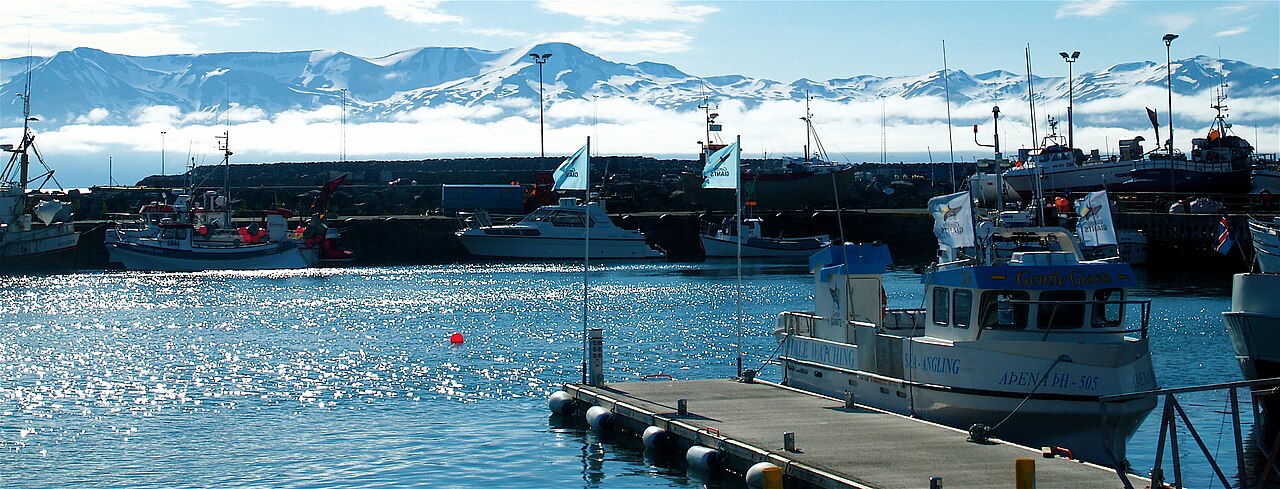
Iceland markets itself as a year-round destination for general tourism, but the actual saltwater fishing window is considerably tighter — roughly May through September. Booking a fishing-focused trip for October on the strength of Iceland’s broader tourism appeal is a common and avoidable mistake.
On the World Sea Fishing forum, someone asked the obvious question years ago: “Anyone been fishing in Iceland fly or sea fishing? Everyone seems to head towards Norway surely Iceland offers similar?” A poster who’d fished there replied that the shore fishing “has no equal for sheer numbers of fish, not even in Norway I reckon” — in the north, he wrote, “you would literally expect triple shots of cod most casts,” with cod and coalfish running to 20lb from a small harbour near where he stayed, and the seabed “utterly paved with specimen (2lb+) dabs” thick enough to be a nuisance rather than a novelty. He rated Norway ahead of Iceland for boat fishing specifically, for one plain reason: fewer operators are properly set up for visiting anglers. He’d tried contacting a lodge-style operation in the West Fjords and never got a reply, possibly because it had since signed an exclusive deal with a UK tour operator — a small, ordinary example of exactly the kind of thin operator density this guide keeps coming back to.
Coastal and fjord fishing centers heavily on cod, haddock, and other groundfish species, plus genuinely strong halibut opportunities in specific deeper channels, making Iceland something of a lower-key, less internationally marketed cousin to Norway’s more famous fjord fishery. The Westfjords specifically, around towns like Flateyri and Bolungarvík, have produced some of the biggest halibut ever landed by rod and line anywhere in the North Atlantic — the official sea-angling record, a 485lb fish measuring 2.5 meters, came from waters off Bolungarvík after a two-hour fight that needed five extra hands to get the fish aboard. That’s the kind of upside that makes the region worth the extra logistics for anglers specifically chasing size over volume. The species list overlaps significantly, but Iceland’s fishing tourism infrastructure is noticeably less developed, which cuts both ways: less pressured water and generally lower costs than equivalent Norwegian trips on one hand, thinner guide and boat availability on the other. A day charter targeting cod and halibut from a coastal town typically runs meaningfully less than a comparable Norwegian fjord trip, though exact pricing varies significantly by region and operator experience level.
Research specific operators directly rather than assuming a general destination reputation — English-language guide fluency, boat quality, and tackle provided all vary more by region and specific operator than in more established fishing-tourism markets, and Iceland doesn’t yet have the operator density that lets weak options simply lose business to better ones.
Technique for Icelandic coastal fishing leans toward jigging and bottom-fishing with cut bait or artificial lures over structure and drop-offs, similar in principle to Norwegian technique but adapted to Iceland’s specific coastal geography, which includes more open coastline exposure alongside sheltered fjord sections depending on region.
Weather deserves the same honest caution given for Norway, arguably more so. Iceland’s North Atlantic position means weather systems can move through quickly and unpredictably even within the summer fishing season, and a trip planned around a tight schedule risks losing fishing days to conditions that simply weren’t forecast accurately even a day or two out. Build real flexibility into any Iceland fishing itinerary.
Cost for a multi-day fishing-focused trip, including basic lodging and charter access, tends to land somewhat below comparable Norwegian trips but still reflects Iceland’s generally high cost of living — budget realistically rather than assuming “not Norway” automatically means inexpensive. Where this destination underperforms for dedicated anglers specifically: the fishing-tourism infrastructure genuinely trails Norway’s in guide specialization and boat quality consistency, meaning a trip here rewards flexible, patient travelers more than anglers expecting a tightly optimized, guide-perfected experience from day one.