Roosterfish Spooking Off Your Beach Cast? The Fix Isn't Switching to Fly
Why positioning and retrieve continuity, not fly versus conventional tackle, determine whether a beach-cast roosterfish commits or turns away.
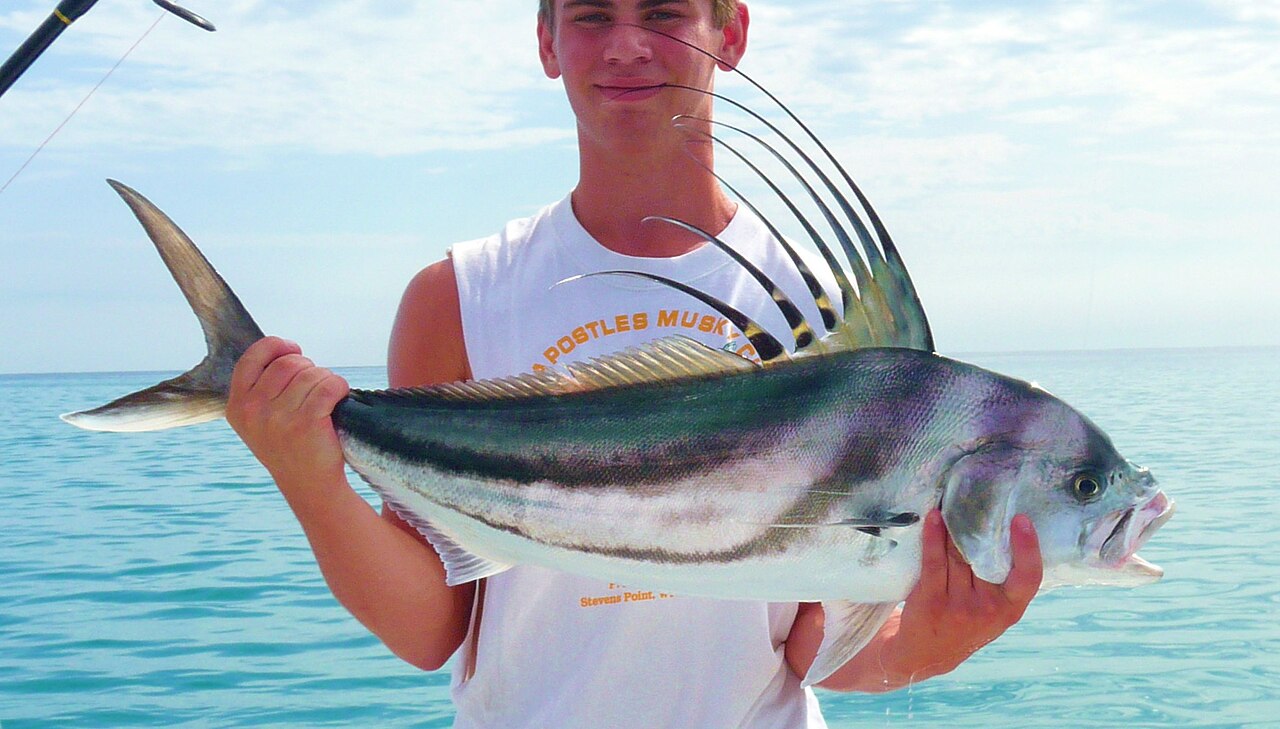
An angler who’d had multiple shots at roosterfish over several days of beach fishing asked a question that comes up constantly in this fishery: the fish kept spooking as the lure came by, so would they hit a fly more readily, and was it worth switching rods entirely for the next trip. The replies were general encouragement. Nobody actually answered whether fly tackle solves a spooking problem.
It doesn’t, and one widely shared account of chasing roosters down a Baja beach with a fly rod makes that plain. Twenty fish covered in a single session. One follow. No commitment. Fish “getting combed,” raising their dorsal spines in visible interest, and turning away anyway. The tackle wasn’t the variable there. Something else was.
Positioning is the bigger lever, and it looks nothing like standing still and casting when a fish comes into range. Roosterfish cruising the surf line move fast, faster than most anglers expect the first time they watch one close on baitfish, and they’re frequently spotted already close by the time anyone reacts. A cast made once the fish is already near lands the presentation directly in its alert zone. The anglers who actually connect are sprinting down the sand to get ahead of a fish’s path before casting into its line of travel, not casting from wherever they happened to be standing. The specific target most experienced beach anglers describe is getting 20 to 50 yards ahead of a cruising fish, then delivering the cast at roughly a 45-degree angle across its line of travel rather than straight at it, so the retrieve crosses the fish’s path instead of running directly away from it. That angle matters as much as the sprint itself: a fly or lure moving directly away from a rooster reads differently to the fish than one crossing its field of view like fleeing bait actually would.
Footwork during that sprint matters too, and it’s easy to undo the positioning advantage by moving carelessly. Roosterfish get large by being genuinely wary of anything moving unnaturally near the surf line, and a heavy-footed sprint straight at a fish, rather than alongside its direction of travel, spooks it before a cast is even in the air. The better approach is closer to matching the fish’s own pace and direction, moving with it rather than at it, right up until the position is set for the angled cast.
Retrieve continuity matters as much as speed. An erratic, continuously fast strip that mimics fleeing bait draws committed strikes. Any hesitation as the lure passes close to the fish, an instinctive reaction most anglers make without noticing when a big fish is suddenly right there, is exactly what triggers the last-second turn-away.
Material choice matters more on a beach than from a boat, too. Lead-eye or heavily bucktailed clouser-style flies pick up sand on a surf retrieve and quickly foul, a problem clean boat water doesn’t create. Sparser, sand-shedding materials hold up across repeated casts, and the same goes for lures: trebles and skirts that foul with sand or weed lose their action right when a following fish is deciding whether to commit.
This is a different problem from the boat-based bait-and-switch technique covered elsewhere in this guide, which solves getting a fish to commit at all. Here, the fish is already looking. The next time a rooster follows and turns away at roughly the same distance, cast after cast, that’s the tell: a positioning and retrieve problem, not a decision about which rod to bring.