King Mackerel: Four Techniques That Work in Completely Different Conditions
Slow-trolling, kite fishing, drifting, and chumming for kingfish, and how to pick the right one for that day's conditions.
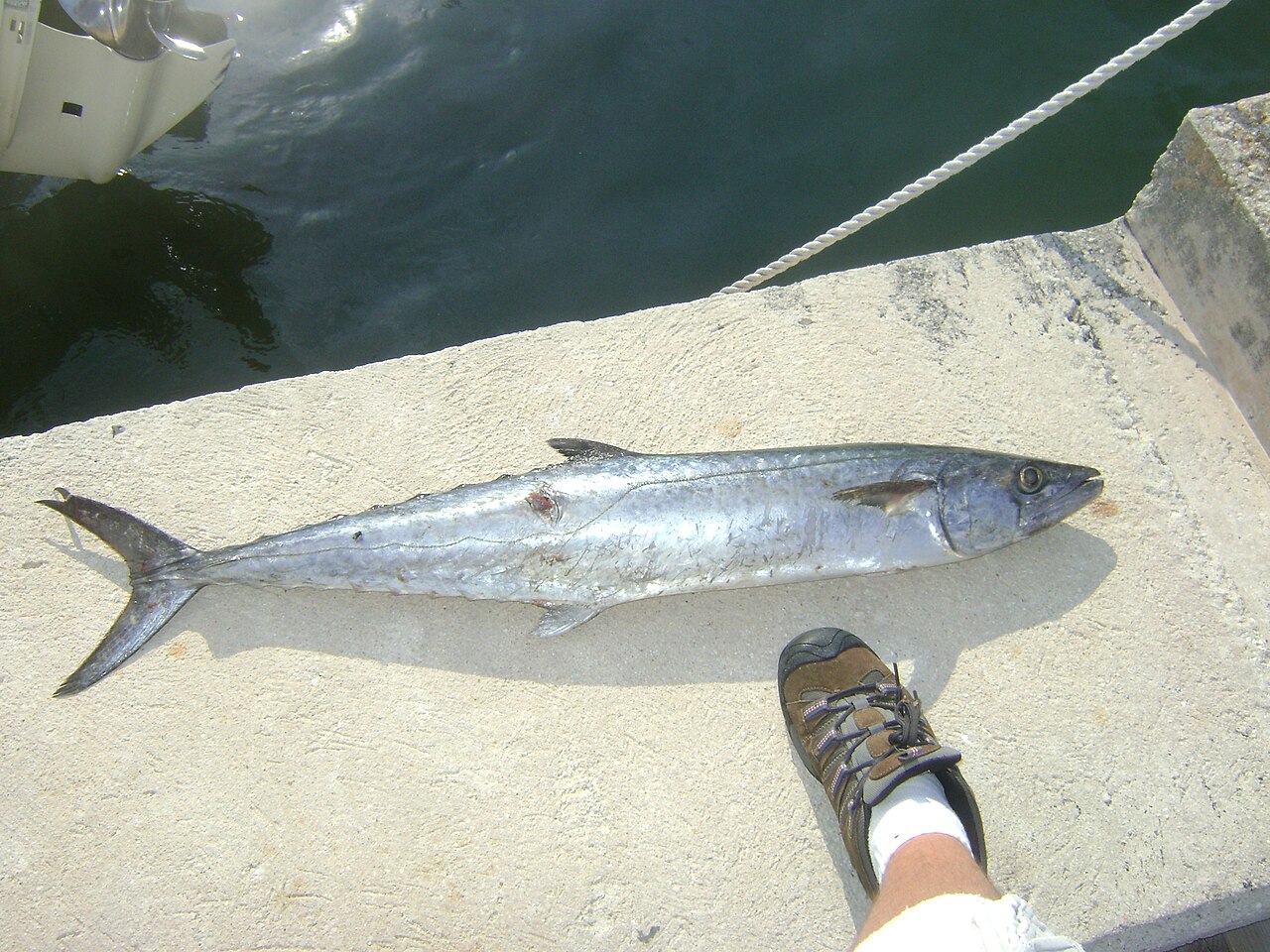
Most kingfish content picks a favorite technique, usually slow-trolling live bait, and treats everything else as a backup for when the main approach isn’t working. That gets it backwards. Kingfish move with bait, structure, and current in ways that shift week to week, and the anglers who catch them most consistently show up with four techniques instead of one.
Slow-trolling live bait (blue runners, threadfin herring, cigar minnows) is still the foundation. It keeps a natural presentation moving near structure, wrecks, or bait schools at a speed slow enough that the bait swims instead of skipping. Most boats troll at 1.5 mph or slower, and “bump trolling,” slipping the engine in and out of gear to hold the bait just behind the transom, is the standard adjustment when kings want it barely moving at all.
Kite fishing suspends live bait at the surface without a hull sitting directly over it, which matters on calm days when kings are holding shallow and spooky. It borrows the same logic as the sailfish kite technique covered elsewhere in this guide, and it doubles as a chumming platform.
Drifting over known structure asks less of the boat and the angler. Bait moves with the current instead of being pulled through it, covering water passively, and it can beat active trolling on days when kings sit tight to one specific piece of bottom rather than roaming.
Anchoring and grinding a chum slick works when kings are known to stack over a specific wreck or ledge. A Coastal Angler Magazine profile of tournament captain Clayton Kirby, a two-time SKA Angler of the Year and five-time winner of the Greater Jacksonville Kingfish Tournament who’s been dominating East Coast king tournaments since the early-to-mid 1980s, is specific about what that actually looks like in practice: hand-grinding fresh menhaden through a meat grinder every five minutes while downrigger baits stay set at just 5 to 7 feet even over water far deeper than that. The prep before that grinding even starts is its own full job — Kirby’s team fills two 5-gallon buckets of cast-netted menhaden for the grinder, ices down another 20lbs for later chumming, and stocks livewells with as many as 60 large live menhaden for the live-bait side of the program. It’s less romantic than it sounds and more repetitive than most anglers expect going in.
Location knowledge outweighs technique refinement here. Wrecks, artificial reefs, and hard-bottom ledges hold baitfish, and baitfish hold kings. Time spent studying charts and asking a local bait shop what’s been holding fish beats another hour spent fine-tuning trolling speed.
That first run is fast for a specific, physical reason. King mackerel are built almost entirely around speed, capable of bursts up to roughly 40+ mph, and can retract their dorsal fin into a groove along their back mid-swim to cut drag even further when they need to move. The IGFA all-tackle world record, 93lb, was caught off San Juan, Puerto Rico in 1999, but most kings anglers actually catch run 20-40lb — meaning even an average-size fish is pulling drag at a genuinely startling initial speed relative to its size, which is exactly why the first run catches so many unprepared anglers off guard regardless of how many times they’ve fished for kings before.
Tackle needs to handle a fast, powerful first run, and wire leader is standard given a king’s teeth. But standard isn’t the same as enough. At the 2020 U.S. Open King Mackerel Tournament in Southport, NC, one team lost what would have been a championship fish on the final day, at 2pm, when their 38-pound wire leader gave out on a king bigger than the wire was rated for. They rebuilt at 40-pound test afterward, on the logic that a slightly heavier wire that spooks a few more bites still beats a lighter one that can’t finish the job.
One thing worth pushing back on: most kingfish content ranks these four techniques, crowning one “best” and filing the rest as inferior backups. Reading the day (wind, current, visible bait, water clarity) and matching technique to it beats picking a favorite and forcing it regardless of conditions. The anglers who catch kings most consistently aren’t loyal to one method. They’re just willing to switch.