Bluefish: The Species That Punishes Anglers Who Underestimate It
Why wire leader and reading breaking fish, not just blind casting, separate serious bluefish anglers from casual ones.
A newcomer to the SurfTalk forum laid out a problem a lot of East Coast anglers know well: fishing California most of the year, heading back to fish Boston and Long Island with his brothers in July, he’d read about heavy leaders used for bluefish but suspected “those keep some stripers” from biting. He wasn’t wrong to worry. That’s the real trade-off at the center of mixed-bag fishing for stripers and blues — the leader that saves a lure from a bluefish’s teeth is heavier and more visible than what a line-shy striper wants to see, and there’s no single setup that’s optimal for both fish at once.
Bluefish get dismissed by a lot of anglers as an aggressive, somewhat unrefined nuisance species that eats indiscriminately and doesn’t require much technique — a reputation that’s not entirely wrong but that causes plenty of anglers to lose gear and fish through genuinely avoidable mistakes.
Blind casting into open water produces bluefish reliably enough during active feeding periods. These fish school aggressively and feed with a reckless intensity when actively hunting baitfish, which makes them one of the more forgiving species in terms of precise casting when a school is nearby and feeding.
Fishing for visibly “breaking” fish rewards a completely different, more targeted approach than blind casting. Schools actively feeding on the surface are often visible from a distance by splashing, diving birds, and surface commotion, and running toward them rather than waiting for them to come to you generally produces considerably more action in a shorter window — these frenzies can be short-lived. A 2014 Long Beach Island fishing report described exactly this kind of tip-off: word came in from a bunker boat that “big gorilla blues” were “stacked out at the Mudhole,” and anglers who acted on that word before it went stale were the ones who found fish.
Wire leader is essentially mandatory, and this is the single most common gear mistake anglers make with this species specifically. Bluefish teeth cut through standard leader material in a single bite, similar to the wahoo, kingfish, and barracuda considerations covered elsewhere in this guide, and running standard fluorocarbon or monofilament without a wire trace reliably results in cut-offs. The SurfTalk angler’s instinct about stripers being leader-shy was correct — it just doesn’t extend to blues, which don’t seem to care.
Lure and fly selection benefits from durability more than subtlety. Bluefish strikes tear apart delicate presentations quickly, and anglers who prioritize a beautifully tied fly or an expensive, finely detailed lure over something more durable often find their gear shredded within a few fish.
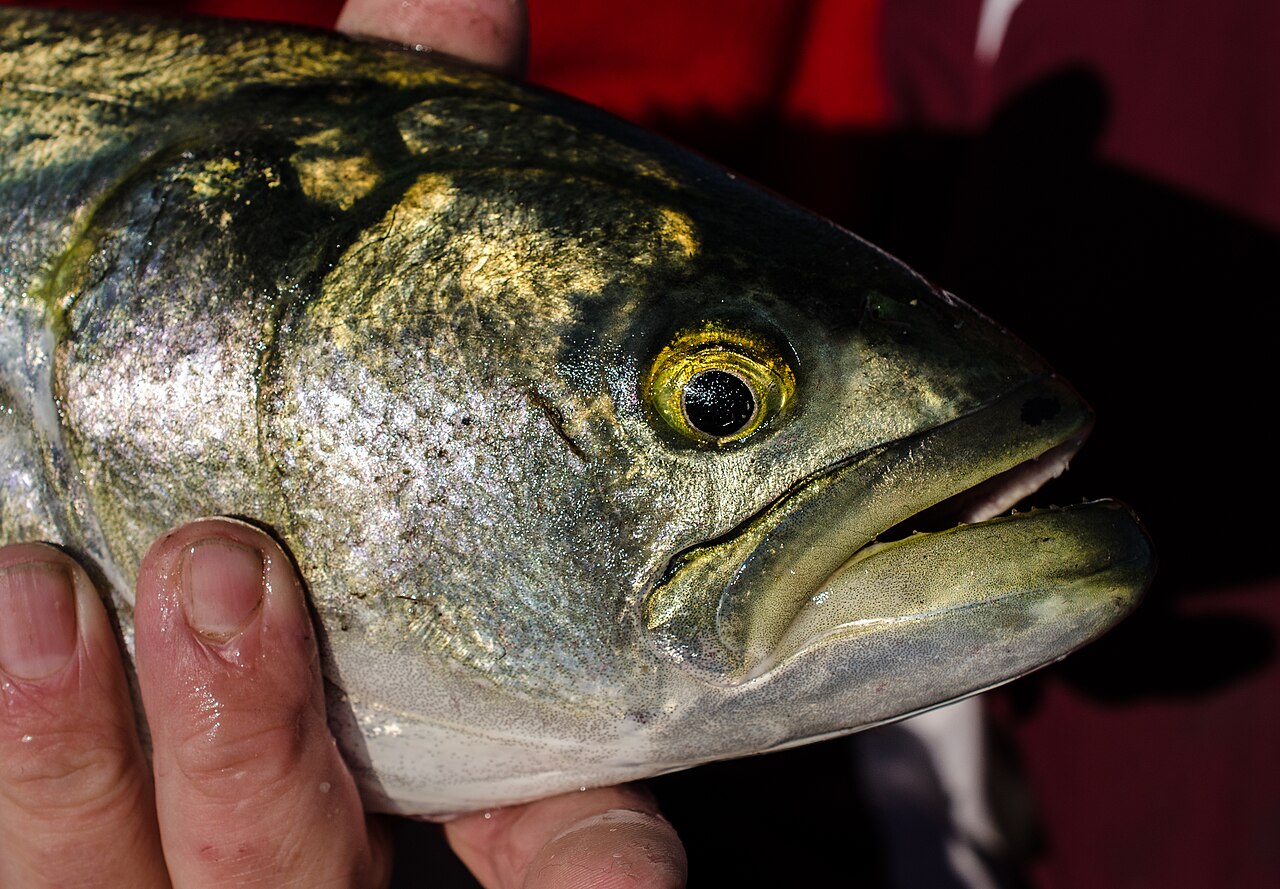
Handling caught bluefish deserves genuine caution that a lot of general species guides underplay. Their teeth and thrashing behavior when unhooked make them more likely than many other commonly targeted species to injure an inattentive angler — using pliers and keeping fingers well clear of the mouth isn’t excessive caution, it’s basic practice specific to this species.
Tackle can run moderate given the size range of typical encounters, though larger “gorilla blues” — the same class of fish that Long Beach Island report was chasing, and roughly the 10-15lb range that regularly turns up on bunker around the same stretch of Jersey Shore coastline — genuinely test tackle with fast runs and sustained power beyond what their size alone suggests.
A lot of anglers, having heard bluefish dismissed as an easy, unrefined catch, approach them with minimal preparation and lose gear or get hurt through careless handling. Treating this species with the same technical respect given to more “prestigious” gamefish — proper leader, careful handling, reading feeding behavior rather than just blind casting — produces both better results and a safer experience than the dismissive approach its reputation encourages.